
In many parts of the MENA region, small businesses are growing fast. Whether it’s a local store, an online seller, or a small service company, managing money well is always important. With taxes, daily sales, stock, and payments to handle, it can get confusing. That’s why using accounting software has become more common.
Today, software is not just for accountants. It helps small business owners understand their numbers better. You don’t need to be an expert to use it. Just a few clicks, and you can see how your business is doing.
Tax and VAT Support Made Easier
In countries like the UAE, Saudi Arabia, and Oman, VAT is now part of regular business. Filing VAT returns and making sure your invoices follow the law is something that must be done correctly.
Here’s how the best accounting software helps:
- It creates tax invoices in both Arabic and English
- It includes VAT automatically in each bill
- It prepares VAT return forms like the UAE’s Form 201
- It supports different VAT types: domestic, intra-GCC, reverse charge, zero-rated, and more
- It handles supplies from Designated Zones, which have special rules
This saves time and lowers the risk of mistakes.
Stay on Top of Your Business With Better Reports
Running a business is not just about selling. You also need to know which product sells the most, which customer delays payment, or where you spend too much. Good software gives you reports that make these things clear.
Reports that help include:
- Sales and purchase summaries
- Customer payment history
- Top-selling items
- Business growth over weeks or months
- VAT input and output totals
You can even choose how you want to view the reports – with numbers, charts, or simple tables.
The Significance of These Skills
Accounting software with these capabilities benefits small firms in a number of crucial ways, even without mentioning specific brands:
- Time savings ─ Bank feeds, VAT return preparation, and automated invoicing cut down on paperwork and manual compliance work.
- Error reduction ─ Prevent fines and rejections by using built-in validation for VAT categories and invoice sequences.
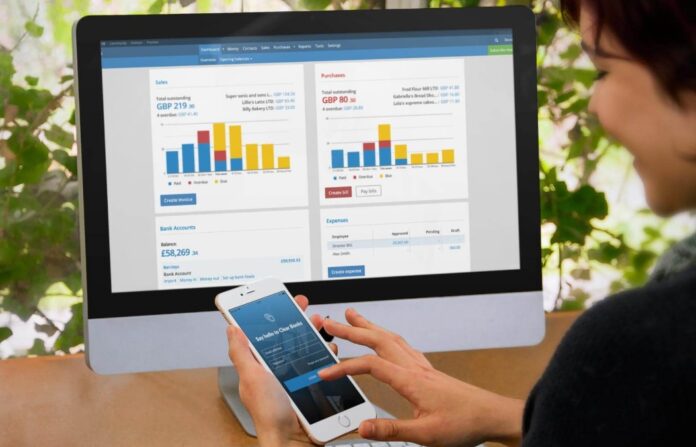
- Financial clarity ─ Non-accountants may more easily and quickly grasp their financial health thanks to intuitive dashboards and visual reports.
Analytics & Reporting
Profit and loss, balance sheets, top-selling items, customer-ledger reports, VAT input/output summaries, and period-to-period business growth charts are among the important reports that owners should be able to create. These days, the majority of systems include choices for table-style, chart-based, and numeric presentation.

Financial Visibility & Cash Flow
The most effective solutions provide user-friendly dashboards that display cash flow projections, aging receivables, expected payables, and unpaid customer balances. Financial uncertainty and administrative burden are decreased by automated payment reminders, bank reconciliation, and real-time summary reports.
Free and Open-Source Platforms to Take Into Account for Double-Entry Accounting Systems
Open-source bookkeeping and general ledger systems that support a variety of currencies, financial aspects (such project/trade), the aging of receivables and payables, and flexible invoicing. Some enable bilingual output by supporting per-customer language settings.
Platforms with Accounting Modules in the ERP Style
Financials, HR, inventories, and CRM are all integrated into web-based, modular platforms. They allow many languages and can be deployed on-premises or in the cloud. For instance, localization plugins can frequently enable Arabic. These enable gradual expansion as your company grows.
Free Accounting Software for Desktops
Simple desktop software for managing expenses, bank reconciliation, VAT reporting, and basic invoicing. Perfect for freelancers or lone proprietors who don’t need cloud or multi-user access.
Flexible Systems for Your Daily Needs
Small businesses have different ways of working. Some sell to shops, others sell directly to customers. A good accounting software fits into your system, instead of forcing you to change everything.
Here’s what to expect:
- It works with both fast and slow sales cycles
- It lets you manage both small and large orders
- You can track pending orders and fulfilled ones easily
- It helps with handling returns using debit and credit notes
This keeps your billing and customer experience smooth.
Manage Your Stock Without Stress
Keeping track of your products can be hard, especially if you store items in more than one place. Software makes this easier by letting you see your full inventory, wherever it is.
What it offers:
- Sort stock by size, colour, type, or brand
- Track items in racks, shelves, or godowns
- Know when a product is low and needs reordering
- Keep a list of old stock using ageing reports
- Handle expiry dates for perishable products
This helps prevent loss, overbuying, and missing sales due to stockouts.
Keep Your Cash Flow Healthy
Many small businesses do great in sales but still face money problems. Why? They don’t keep track of who owes them or when they need to make payments. That’s where good software helps with cash flow management.
Key benefits:
- See who paid and who still owes you
- Get alerts for overdue payments
- Plan future spending with cash flow forecasts
- See your available funds at a glance
This gives you peace of mind and more control over your money.

Multi-Currency & Cross-Border Support
Software must support intra-region VAT regulations, manage exchange rates, and handle multi-currency transactions in order to serve GCC commerce or foreign clients.
Path of Modular Growth
Modularity is a feature of open-source systems; if your company expands, you can add payroll, CRM, project accounting, or ERP modules after starting with accounting and inventory.
Deployment Flexibility
Businesses can choose from the following options based on size, preference, and connectivity:
- Systems based on desktops ─ Prefer one-time licensing and offline access. Ideal for warehouses or high-volume retail establishments.
- Platforms that are cloud-based or hybrid ─ Perfect for mobile use, decentralized access, and integration with payment gateways or bank feeds.
Final thoughts
For any small business in the MENA region, keeping financial records is a must. Manual paperwork can lead to errors, delays, or missed payments. With the right accounting tool, all this becomes easier. By choosing the best accounting software for your needs, you don’t just save time; you build a stronger business. It helps you stay compliant, make better decisions, and grow without fear.