
A high product rating feels comforting, especially when you are comparing five similar tools, apps, gadgets, or software platforms.
But a shiny score can hide a messy truth. Some ratings are genuine signals of quality.
Others are inflated by incentives, weak moderation, review swaps, or vague praise that says almost nothing.
The trick is not to become cynical. It is to read ratings like a smarter buyer.
The Problem With A Rating That Feels Too Perfect

The first warning sign is not a high score by itself. Great products can earn great feedback. The issue starts when the score looks cleaner than real customer experience usually is.
A product with thousands of reviews and a perfect average deserves a second look, because real buyers normally have different expectations, setups, budgets, and skill levels.
One person loves the battery life. Another complains about setup. Someone else thinks the app is confusing. That mix is healthy.
PowerReviews reported in its 2025 ratings and reviews guide that 46% of shoppers are suspicious of products with a perfect five-star rating. That reaction makes sense. Real trust usually has a few dents in it.
Check The Review Pattern Before The Headline Score

Before reading individual comments, zoom out and look at the review pattern. An honest product rating usually has a rhythm.
Reviews arrive over time, mention different use cases, and include both excitement and small frustrations. Inflated product ratings often feel strangely synchronized.
You might see a sudden wave of five-star posts, repeated phrases, or dozens of reviews that all sound like they came from the same template. This matters even more in tech and business purchases, where one weak detail can waste money or slow down work.
Do not just ask, “Is the score high?” Ask, “Does the review history feel like real people used this in real situations?”
Look For Language That Sounds Too Clean
Inflated reviews often avoid the messy details that real users naturally include. A genuine buyer might mention delivery time, setup steps, a specific feature, customer support, battery drain, integration issues, or how the product behaved after two weeks.
A weak review says “amazing quality” and moves on. If you are checking long batches of comments, an AI detector free tool can help flag unusually mechanical wording, but treat it as one clue, not a final verdict. Also watch for:
- repeated adjectives with no examples
- reviews that praise the brand more than the product
- five-star posts that sound like ads
The more expensive the purchase, the more you should expect useful detail.
Watch The Timing, Not Just The Tone
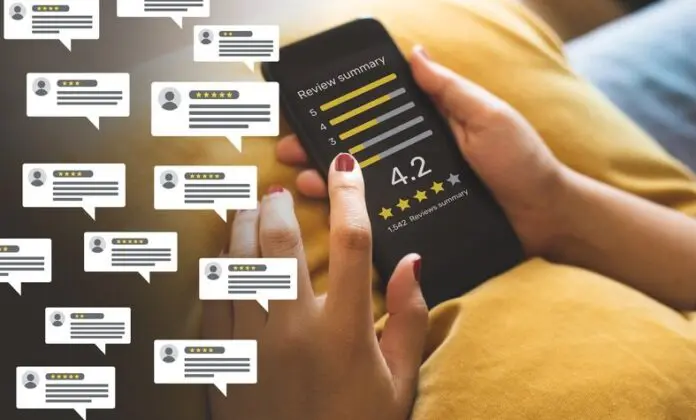
Timing can reveal things the average score hides. If a product launched last week and already has hundreds of glowing reviews, slow down. It may be a viral hit, but it could also be a campaign, a sampling push, or worse.
A 2024 working paper, “Detecting fake review buyers using network structure: Direct evidence from Amazon,” by Sherry He, Brett Hollenbeck, Gijs Overgoor, Davide Proserpio, and Ali Tosyali, found that products buying fake reviews were highly clustered in product-reviewer networks.
You do not need network analysis to shop smarter, though. Just check whether reviews grew naturally, whether early praise continued later, and whether newer reviews confirm or challenge the older ones.
Compare The Score With The Actual Product Risk
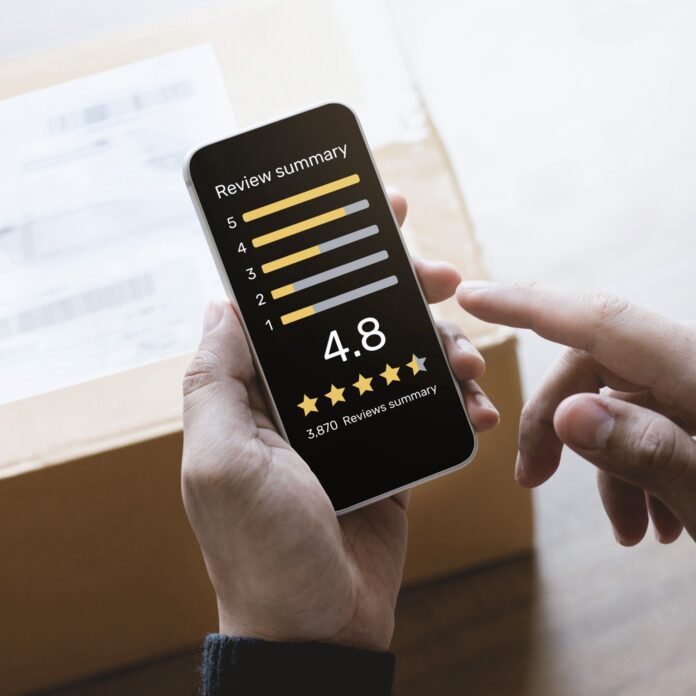
A 4.9 rating does not mean the same thing for every product. For a phone case, the risk is low. For accounting software, cybersecurity tools, office equipment, or a laptop used for work, the risk is much higher.
That is why review depth matters more when the product affects productivity, data, money, or daily operations. Use the score as a starting point, then match it against the kind of decision you are making.
| Product situation | What to check before trusting the score |
| Cheap accessory | Enough reviews, clear photos, basic complaints |
| Tech device | Long-term use, warranty issues, setup problems |
| Business software | Support quality, integrations, cancellation terms |
| High-ticket purchase | Verified buyers, recent reviews, detailed negatives |
A good rating should reduce uncertainty, not replace your judgment.
Read The Unhappy Reviews Like A Detective
The one-star and two-star reviews are not always fair, but they are often useful. Some people leave angry reviews because shipping was late or they misunderstood the product.
Others point to real problems that polished five-star comments skip. Look for patterns, not drama. If five people mention overheating, missing parts, poor support, or confusing billing, that matters.
If one person complains that a budget product is not luxury quality, that may not matter to you.
A trustworthy review profile does not need to be perfect. It needs to show enough range, context, and consistency for a buyer to understand the trade-offs.
That is the real goal. You are not looking for flawless praise. You are looking for predictable reality.
What Honest Platforms Usually Make Visible

Trustworthy review systems tend to show how reviews are collected, whether buyers are verified, how incentives are labeled, and whether negative reviews are allowed to remain visible. Regulators care about this too.
The U.S. Federal Trade Commission announced a final rule in 2024 banning fake reviews and testimonials, including reviews by people who do not exist, people without real experience, or undisclosed insiders.
In Europe, a 2021 sweep coordinated by the European Commission checked 223 major websites and found that 104 did not explain how reviews were collected and processed. So yes, transparency is not a nice bonus. It is part of trust.
FAQs
1. Can A Product With Only Five-Star Reviews Still Be Legitimate?
Yes, especially if it is new, niche, or sold to a small loyal audience. Still, you should check whether the reviews include specific details, different writing styles, and real use cases. If every review sounds short, polished, and oddly similar, the perfect score deserves caution.
2. Are Verified Purchase Reviews Always Trustworthy?
They are usually more useful than anonymous reviews, but they are not automatically perfect. Some verified reviews can come from discounted products, sampling programs, or buyers who reviewed too soon. Look for disclosure labels and comments written after enough real use.
3. How Many Reviews Are Enough Before Trusting A Rating?
There is no magic number. A product with 30 detailed, recent, verified reviews can be more convincing than one with 2,000 vague comments. For expensive tech or business tools, quality, recency, and relevance matter more than volume alone.
At last
A product rating should make you curious, not careless. When the score looks inflated, slow down and look for the human texture behind it.
Real reviews have specifics, mixed experiences, and a little friction. That is what makes them useful.
The best score is not always the highest one. It is the one you can actually believe.