
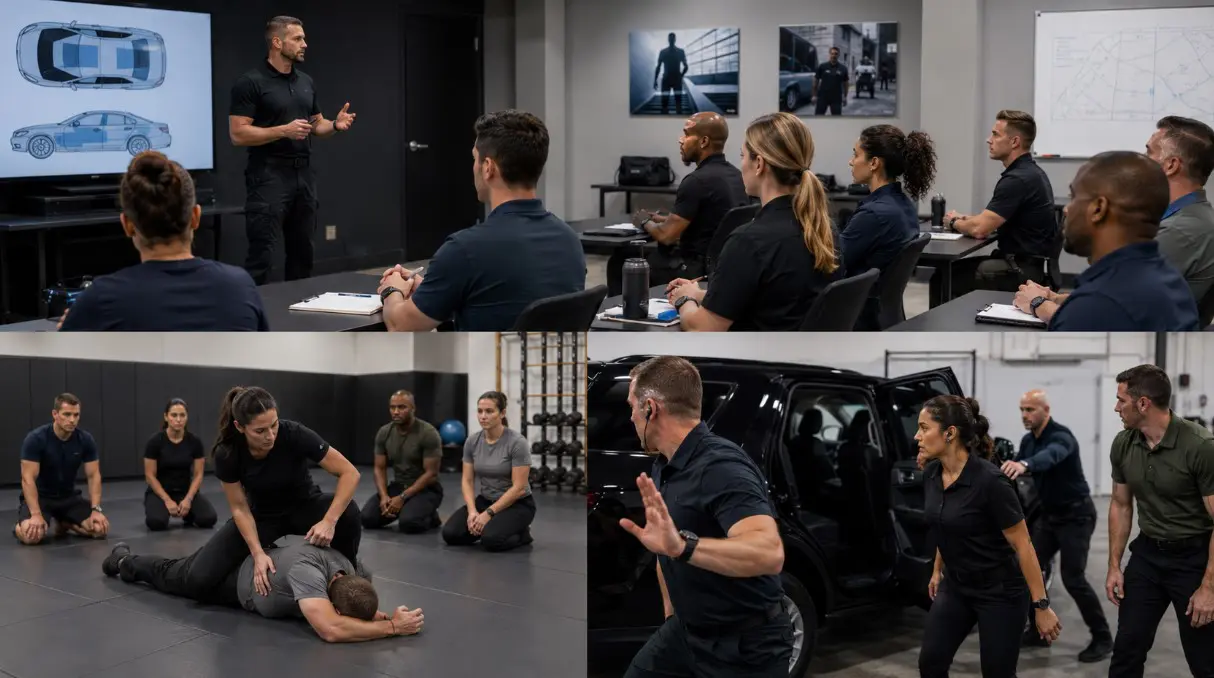
You don’t need a military or police background to move into protective work. Adults break into the field regularly from hospitality, logistics, customer service, event security, and ordinary guard work. What the transition actually requires is the right training — bodyguard classes or an academy-style program that teaches protective operations, planning, communication, and medical readiness — plus the relevant state licensing and a realistic understanding of the job. The people who succeed treat it as a profession to learn, not an image to adopt.
This guide covers what the work really is, what serious training includes, and how the path tends to run.
What executive protection actually is
Executive protection — close protection, in much of the world — is the practice of keeping a principal safe through planning and judgment far more than through confrontation. The visible part (standing beside a client, riding in a vehicle, working a venue) is a small fraction of the job. Most of the work happens earlier: assessing an environment, planning movement, coordinating with staff and venue teams, and deciding what risks to design out of the day entirely.

That’s a useful reframe for anyone weighing the field, because it explains why physical presence isn’t the main qualification. The U.S. Bureau of Labor Statistics’ security guard occupational profile describes the entry-level duties most security careers start with — monitoring, access control, emergency response, reporting — and protective work builds a wider, more deliberate skill set on top of that base.
What good training includes
Not all programs are equal, and the differences matter most to a beginner. Training worth your time and money should cover, at minimum:
- Protective operations and advance work — assessing locations and planning movement before a client arrives.
- Secure transportation — the driving and route principles that make movement safer.
- Communication and report writing — the unglamorous skills that make you employable and trusted.
- Medical readiness — tactical or emergency medicine, because protectors are often the first responder on scene.
- Legal and professional boundaries — what you can and can’t do, and where your responsibility ends.
It should also be honest about format: how much is hands-on scenario work versus lecture, whether it’s built for beginners or assumes prior experience, and which licenses are included versus earned separately.
The career-change path, step by step
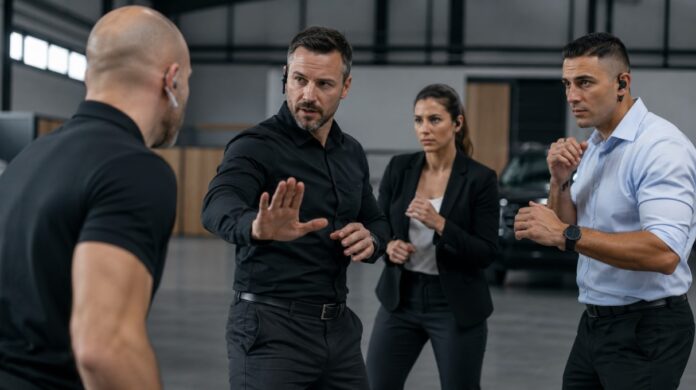
For someone starting from outside the field, the path usually runs roughly like this:
- Research the real job. Read employer descriptions and note the duties that repeat. Independent career exploration and training resources help you compare roles and local demand before you spend a dollar.
- Understand the legal floor. Most security work requires state licensing or registration. Know your state’s requirements before you train.
- Choose training that matches the work. Compare curricula, supervised practice hours, and instructor backgrounds — not course names.
- Build the professional habits. Reliability, discretion, and clean communication are what get you hired again. Training is where you start practicing them.
- Start where you can and specialize. Many people enter through foundational security work and move toward residential, event, or executive details as they build a record.
Comparing bodyguard classes and executive protection courses
When you compare bodyguard classes and executive protection courses, look past the marketing to the curriculum, the supervised practice hours, the instructors’ actual field experience, and the support offered after the course. The strongest options are academy-style and multi-week, because the work genuinely takes time to learn — they don’t promise a job, and they’re specific about what the training prepares you for.
Pacific West Academy is one example of a school that frames bodyguard and executive protection training as a structured career path for civilians and career changers, with a curriculum spanning protective operations, secure transportation, and tactical medicine. It’s the academy model rather than the one-day-seminar model — the kind of program a serious beginner should be comparing against others.
Cost belongs in that comparison, too. Academy-style training is a real investment, and many programs offer financing options — or, for those who qualify, GI Bill funding. Ask for the all-in number before you enroll: tuition, any required equipment, and travel or housing if the school is out of state. A program that’s upfront about cost is usually upfront about everything else.

Questions career changers ask
What classes do I need to become a bodyguard or executive protection agent? Look for training that covers protective operations, secure transportation, communication, and medical readiness — over multiple weeks — and that admits beginners rather than requiring prior tactical experience.
Can I get into protective work without military or law enforcement experience? Yes. Many programs are built for civilians. What matters is the quality of your training, your state licensing, and your professionalism — not a uniform on your résumé.
How long do bodyguard classes take? Serious academy programs typically run several weeks rather than days, because the operational and legal material takes time to absorb and practice. Treat very short “certifications” with skepticism.
Do I need to be big or have a “tactical” look to do this work? No. That image is outdated. Modern protective work runs on situational awareness, planning, discretion, and the ability to de-escalate — and many clients prefer agents who blend in. The quality of your training matters far more than your size.
The best move into this field is rarely the fastest one. Career changers who research carefully, train properly, and build a reputation for dependability tend to outlast the ones chasing the title.