Paysafecard allows you to make safe deposits and save time while avoiding possible registration problems. It has been used for years and is one of the best non GamStop casino payment options for players with its unique features that include:
Safe, anonymous, and fast deposits
No processing fees in the online casino
Funds are not linked to the bank account
Who wouldn’t want to use a means of payment that ensures fast, secure and reliable transactions? With a Paysafecard (PSC) you can benefit from all these advantages.
You can get the prepaid card from countless dealers in your area, from drugstores to gas stations.
There you simply look for a voucher with the desired amount and use the 16-digit PIN code on it to pay quickly and securely in a Paysafecard non GamStop casino. Alternatively, you can also buy a PSC online.
Whatever you decide, this means of payment combines anonymity, since no bank details are required, with convenience. It simplifies your financial management and convinces you with low fees, direct deposits and absolute security.
In English-speaking countries, Paysafecard online has earned the nickname “Gambling Darling” in industry circles because of the numerous advantages it offers to betting enthusiasts and online casino players. Founded in Austria in 2000, the company quickly established itself throughout Europe by taking over competitors.
In our extensive article, you can find out what other advantages the use of the Paysafecard brings with it.
How Exactly Does Paysafecard Work?
The Paysafecard is a prepaid card and a popular payment method that is accepted in many non GamStop casinos, also known as Paysafe Casino. A safe and convenient deposit method, Paysafecard allows players to add funds to their player account.
To make a deposit, the player enters the Paysafecard’s unique 16-digit PIN code during the checkout process.
Here is a brief explanation of how Paysafecard works:
Purchase ─ First, the Paysafecard, a prepaid card, must be purchased. It can be bought in many shops, petrol stations, supermarkets or online. The Paysafecard is available in different credit values, such as 10 euros, 25 euros, 50 euros or 100 euros.
Code ─ There is a 16-digit PIN code on the Paysafecard that is used for payment. This code serves as digital cash and is important in order to use the Paysafecard as a payment method in an online casino, also known as Paysafe Casinos.
Payment ─ In order to make a deposit with the Paysafecard, the customer selects the “Paysafecard” option as the payment method during the payment process. Then the 16-digit PIN code is entered.
Use ─ The value of the Paysafecard will be deducted from the total amount of your purchase or deposit in a Paysafe Casino. If the value of the Paysafecard is higher than the purchase amount or the deposit limit, the remaining amount stays on the card and can be used for later purchases or deposits. If the purchase amount or the deposit limit is higher than the value of the Paysafecard, the remaining amount can be paid with another Paysafecard or another payment method.
Security ─ The Paysafecard is considered a secure payment method because you do not have to reveal any personal or financial information when paying. This is particularly advantageous when making deposits in online casinos since sensitive data is protected. It is also possible to check the current Paysafecard balance online to check the remaining amount.
Deposit in Online Casino With Paysafecard
Source: howtocasino.com
Choose an online casino that accepts Paysafecard as a payment method. Make sure the casino is licensed and has a good reputation.
Register or log into the selected casino’s player account if you already have one.
Navigate to the cashier or deposit page on the casino’s website.
Select it as a payment method from the list offered.
Enter the desired deposit amount, but make sure it is within the set limits.
Enter the 16-digit Paysafecard PIN code that you received when you bought the card.
Confirm the deposit by completing the required steps according to the casino’s instructions.
As soon as the deposit is confirmed, the amount is deducted from the Paysafecard balance and the deposited money is immediately available.
Limits & Fees
When depositing with Paysafecard in online casinos, there are usually no direct fees. Most reputable non GamStop casinos do not charge any additional fees for Paysafecard deposits.
However, you should be aware that some casinos may charge fees for certain payment methods. Therefore, always read the casino’s terms and conditions to make sure you are aware of any fees that may apply.
Casino Bonuses
Source: anurag.edu.in
In the virtual casino market, numerous websites are vying for your attention. Many offer generous welcome bonuses to attract new customers to Paysafecard Casino.
There are a wide variety of variants, such as a deposit bonus, where you receive a percentage bonus credit. Other extras of a Paysafecard casino bonus can be free bets or free spins for online slot machines. Sometimes whole packages are available that combine different offers.
Pay special attention to such promotions where you receive a casino online bonus with Paysafecard as a deposit method because with this you can benefit from both a secure and user-friendly payment and an exclusive online casino bonus.
Mobile Paysafecard Casino
Playing at mobile non GamStop on the go has long been part of everyday life for many people. It’s convenient and fun to distract yourself during your lunch break, on the bus or train, or just in between, and offers great entertainment. In such a case, it is particularly practical to select a Paysafecard online casino not on GamStop, because it is extremely easy to top up via smartphone or tablet.
Simply create a MyPaysafecard account to process your transactions. With the corresponding app, you can top up your online account quickly and easily with the PIN or a QR code and redeem it directly in a mobile online casino with a Paysafecard deposit.
No bank details need to be entered here either; moreover, with a MyPaysafecard account, you can track your entire payment history, making it easier for you to keep an eye on your budget.
Baking has long been a harmonious blend of science and art. With evolving techniques and innovation, the culinary world is constantly being redefined. One such groundbreaking method that has reemerged in the spotlight is flame treating. It’s not just about applying heat; it’s about harnessing the power of flames to elevate baked dishes to a new dimension. This blog dives deep into this technique, unraveling its wonders and showing why it’s touted as a game changer in contemporary baking.
Understanding Flame Treating
Flame treating is steeped in tradition, far from being just a recent culinary fad. Rooted deeply in cooking history, its essence revolves around subjecting food, predominantly baked items, to the fervor of open flames. The primary goal? To masterfully char or caramelize the surface, bestowing it with character and depth. While ancient chefs leaned on the unpredictability of open fires to harness similar outcomes, today’s chefs have the advantage of leveraging modern equipment, yielding greater precision and command over the process. The outcome? A palate explosion as flame treating unearths layers of intense flavors, serving up a gastronomic adventure that’s unparalleled.
Advantages of Flame Treating
The charm of flame-treated baked delights transcends mere aesthetics. When subjected to the raw power of flames, the transformation is multi-dimensional.
Flavor and Aroma Development: Flame treating is an alchemy. By instigating the Maillard reaction and the caramelization process, it refines the dish’s flavor, infusing it with a rich, smoky, and intoxicating depth that lingers.
Visual Appeal: Aesthetically, the results are striking. Baked goods emerge with a golden-brown hue, making them visually enticing and downright irresistible.
Unique Textures: Consider the brittle caramel shield atop a crème brûlée or the rustic crust of a freshly baked bread; flame treating crafts these textures, making every bite an intriguing exploration.
Flame Treating Equipment
Source: thespruceeats.com
Dabbling in flame treating mandates specific tools tailored for the task. Handheld torches, owing to their nimbleness, are a favorite among many. For those seeking an integrated solution, contemporary ovens now boast built-in flame features, placing unparalleled control at the baker’s fingertips. Yet, with the allure of flames comes the need for caution. It’s indispensable to ensure a kitchen with ample ventilation and to keep firefighting tools, like extinguishers, within arm’s reach. Mindful handling of equipment such as Burner Controller, coupled with a strict adherence to the manufacturer’s guidelines, can preempt potential mishaps.
Flame Treating Techniques
Given the vast spectrum of baked delights, flame treating techniques must be bespoke:
Torching Meringues and Desserts: With a torch in hand, a deft application can impart meringues with a tantalizing smoky aroma and hue.
Flame Finishing Bread: Seeking a rustic touch? Direct flame contact can be your ally, crafting a crusty, appetizing bread exterior.
Browning Casseroles and Gratins: Controlled flame treatment is the secret to that sought-after crispy, golden-brown top layer.
Applications in Baking
The scope of flame treating is boundless. Whether it’s crafting the crackly sugar canvas on a crème brûlée or sculpting the crusty veneer of a sourdough bread, the possibilities are immense. Not limited to just desserts, flame treating can also elevate roasted vegetables, giving them a smoky, grilled texture that’s simply sublime.
Flavor Development through Flame Treating
More than just a visual spectacle, flame treating stands as a guardian of flavor. The dance of open flames intricately interacts with the ingredients, triggering the Maillard reaction and the magic of caramelization. This alchemy, a testament to culinary innovation, uplifts the flavor profiles of everything from classic pies to intricate pastries. The taste nuances introduced by flame treating are unmatched. The outcome? A culinary experience where each bite plunges into profound depths of flavor, creating an indelible mark on the senses and leaving a lingering desire for more.
Visual Appeal of Flame Treated Baked Goods
Visual aesthetics in food aren’t trivial; they’re the initial ambassadors, the prelude to the culinary symphony that awaits. Flame-treated delicacies beckon with their lustrous golden-brown glows, alluring caramelized fringes, and impeccable artistic garnishes. The careful application of flame transforms the surface, creating visual textures and hues. Whether it’s a humble pie radiating warmth or an extravagant pastry showcasing craftsmanship, this visual metamorphosis ensures that the first bite is with the eyes, building anticipation for the flavors within.
Texture Transformation
Texture in food isn’t just about tactile feel; it’s about the story each morsel narrates and the journey it takes the palate on. Flame treating crafts tales of contrasts: the marriage of pillowy soft interiors with audacious crispy exteriors. The heat from the flame selectively crisps the outer layers while preserving the moisture inside. This equilibrium of textures, achieved with finesse, is what propels flame-treated dishes into a league of their own, promising a symphony of sensations with every bite, a dance of crunch and softness.
Innovation and Creativity
To term flame treating as merely a technique would be an understatement. It’s a canvas for culinary artists, a realm of endless possibilities. Empowered by flames, chefs can oscillate between varying flame intensities, synergize it with other cooking techniques, and blur traditional boundaries. Beyond mere cooking, it’s about painting with fire, crafting a narrative. It’s an invitation to imaginative thinking, birthing dishes that are nothing short of culinary marvels, each presenting a tale of creativity and innovation.
Safety Considerations
Source: tastingtable.com
While the art of flame treating tantalizes with its prospects, bringing myriad transformations to dishes, safety remains sacrosanct. It’s pivotal to ensure unobstructed airflow in the kitchen, to arm oneself with protective attire, and to treat flame equipment with the respect it demands. The flames, while enchanting, are potent and demand mindfulness. At the heart of it, the mission is to magnify the allure of the dish, without compromising on safety or well-being, ensuring that the culinary journey is both delightful and secure.
Conclusion
Flame treating in baking is more than just a fad; it’s a testament to the ever-evolving nature of culinary arts. From unparalleled flavors and textures to visual appeal, it brings a myriad of benefits to the table. So, whether you’re a seasoned chef or a home baker, we encourage you to stoke the flames of creativity and introduce flame treating into your baking repertoire. Embrace the flame and elevate your baking game!
Brick veneer walls offer a timeless charm that resonates with the nostalgic allure of historic buildings. But times change, and even classic elements need an occasional refresh. The challenge? Bringing a contemporary twist without diminishing their vintage essence.
Whether your taste skews modern, rustic, or somewhere in between, this guide offers innovative makeover ideas to reinvent and rejuvenate that old brick façade.
Paint and Color Transformations
Brick is a canvas waiting to be colored. One of the simplest yet most transformative changes you can make is to paint your brick veneer. Think soft pastels for a serene vibe, or bold hues to make a statement. Light colors like off-white or pale gray can make the space feel airy and expansive, while deep blues or greens give it a sophisticated edge.
On the flip side, consider the whitewashing or limewash technique. It creates a slightly distressed look, allowing some of the original brick colors to peek through. It’s perfect for those seeking a more subdued, rustic finish. This method highlights the brick’s natural texture and gives it a coastal or farmhouse appeal.
Textured Finishes and Techniques
Another transformative approach to consider is textured finishes. German smear is a mortar wash technique that gives bricks a rough-hewn, European charm. By smearing a thin layer of mortar over the bricks, you get a cozy, old-world effect.
If you fancy a more rugged appearance, consider trowel techniques. These methods involve applying a thin layer of plaster or stucco over the brick and then manipulating it with a trowel for texture. Depending on the finish, it can resemble anything from a Tuscan villa to a contemporary loft.
Source: dengarden.com
Creative Wall Decals and Murals
Decals and murals breathe life and artistry into any space. Imagine a sprawling tree decal with birds and leaves, gracefully arching over your brick surface. Such designs can turn an ordinary wall into a captivating focal point.
But if you lean more towards urban aesthetics, consider a mural. A dramatic city skyline or abstract artwork can bring vibrancy and depth. This artwork can be as simple as a silhouette or as intricate as a Renaissance fresco, all depending on your personal touch.
Industrial and Rustic Accents
Metal shelving, exposed piping, or wrought iron artwork can ramp up an industrial flair. By juxtaposing brick’s earthiness with metal’s sleekness, you can evoke an ambiance reminiscent of a chic loft or an old factory.
Wood, on the other hand, brings warmth and rustic vibes. Barnwood frames or reclaimed wooden beams can accentuate the brick’s inherent coziness. Together, brick and wood create an ambiance that’s both grounded and inviting.
Modern Minimalist Approaches
Minimalism celebrates simplicity and function. With brick walls, a few strategically placed items can make all the difference. Opt for sleek, streamlined furniture, geometric patterns, and a muted color palette for a modern, uncluttered feel.
Meanwhile, let the brick wall be the central artwork. Rather than cluttering it with multiple decor pieces, use one or two standout items. A large, round mirror or a monochrome canvas piece lets the brick shine while adhering to minimalist principles.
Source: stonefarmliving.com
Vintage and Shabby Chic Styles
A touch of vintage charm can make your brick veneer sing. Picture ornate frames housing black-and-white photos, or floral-patterned fabrics set against the backdrop of brick. Such elements give the space a nostalgic twist, reminiscent of bygone eras.
For a shabby chic look, distressed wooden furniture or pastel-colored decor are ideal companions for brick. Lace curtains, antique clocks, and porcelain vases all contribute to an ambiance that’s both elegant and delightfully weathered.
Natural and Organic Inspirations
The beauty of nature can complement the brick’s earthy tones. Consider wall-mounted planters with cascading greenery or large potted indoor trees. They not only infuse life into your space but also play off the brick’s rugged texture.
Stone accents are another brilliant pairing. Slate, marble, or even river rock can be integrated into the space. Whether in the form of a tabletop, a wall-mounted feature, or decorative pieces, they amplify the natural theme.
Functional Wall-Mounted Solutions
Shelves and storage units provide both form and function. Floating wooden or glass shelves showcase your prized possessions without overshadowing the brick backdrop. They create visual interest while offering practical storage solutions.
Hooks and pegs, when tastefully arranged, offer practical utility. Perfect for hanging everything from pots and pans in a kitchen to coats and hats in an entryway, they seamlessly merge design and functionality.
Source: jlsons.ca
Lighting Enhancements
Correct lighting can accentuate the texture and color variations of brick. Uplighting, for instance, can create dramatic shadows, drawing attention to the wall’s unique features. Wall-mounted sconces or pendant lights offer both illumination and aesthetic appeal.
Recessed lighting or LED strip lights can provide a soft, ambient glow. By highlighting the brick’s intricacies, such fixtures not only enhance visibility but also create a cozy, intimate setting.
Statement Furniture Pairings
When styling around a brick veneer wall, the right furniture can elevate the whole design. Mid-century modern pieces, with their clean lines and bold forms, contrast beautifully with brick’s ruggedness. Leather couches or chairs add a touch of luxury and sophistication.
For those drawn to eclectic designs, Bohemian or artisanal furniture, with its rich textures and vibrant colors, makes for a stunning juxtaposition against the brick’s earthy backdrop.
Mixed Media Masterpieces
Incorporating various materials into your brick veneer wall design can craft an intricate yet harmonious tapestry. Think of merging metal with wood or pairing glass with fabric, all set against the brick background. This fusion creates a rich, multi-dimensional look that is both captivating and unexpected.
Metal grids or wire mesh, for instance, introduce an industrial feel, especially when adorned with hanging plants or decorative items. Alternatively, fabric tapestries or woven wall hangings lend a softness that contrasts beautifully with brick’s rough texture. The key lies in selecting elements that not only resonate with your style but also enhance the wall’s inherent charm.
Source: cavabuilding.com
Final Thoughts
In the dance between the old and the new, your brick veneer wall can either be a backdrop or the star of the show. Whether you lean towards the simplicity of minimalism or the charm of vintage aesthetics, there’s a myriad of ways to make that brick wall uniquely yours. It’s all about creativity, a nod to your style, and an embrace of the timeless appeal that brick inherently offers.
Across the annals of fashion, few items hold as pivotal a place as the handbag. Tracing back to ancient civilizations where pouches around the waist were the rage, handbags have been the silent companions of societal evolution.
Their trajectory is fascinating, mirroring the evolution of cultures, societies, and roles, especially of women. More than a mere functional accessory, the handbag is a sartorial emblem of personal taste, a reflection of one’s ethos, desires, and aspirations. It’s not just about carrying essentials but about making a definitive statement.
In this deep dive, we will navigate the vast oceans of handbag fashion, drawing upon the symphony of trends, materials, textures, and insightful nuances of accessorizing with panache.
Top 4 Handbag Trends
Source: think-feel-discover.com
As we steer through 2024, the canvas of handbag fashion showcases a delightful play of contrasts. Traditional designs are getting a modern facelift, while innovative styles draw inspiration from the past:
Oversized totes ─ Often viewed as the dependable workhorse of handbags, totes have grown not just in popularity but in size. Commanding attention with their imposing presence, these bags are as much about making a statement as they are about functionality. Ideal for the woman on the go, they symbolize a blend of utility and style.
Micro bags ─ In the world of fashion, where exaggeration often rules, micro bags champion the cause of minimalism. They’re like the sonnet of the bag world: compact yet profound. While they challenge the conventional norms of utility, they underline the aesthetic essence of fashion – beauty, elegance, and intrigue.
Bucket bags ─ A harmonious marriage of form and function. Their drawstring closure is a nod to a simpler time, yet their varied designs and materials root them firmly in the present. A versatile addition to any wardrobe, they effortlessly bridge the gap between casual and formal.
Ahdorned bags ─ Bridging the gap between personal expression and functional design, Ahdorned bags have swiftly risen to the pantheon of must-have accessories. A celebration of individualism, these bags stand out with their customizable and interchangeable straps, allowing wearers to tailor their look to their mood or ensemble seamlessly.
Materials and Textures
The choice of material in a handbag is akin to the brushstrokes in a painting, setting the tone and mood for the artwork:
Leather ─ Synonymous with luxury, leather bags age like fine wine. Their durability coupled with their classic appeal makes them a perennial favorite. Whether it’s the smooth finish of calfskin or the textured grain of pebbled leather, there’s a tactile joy in holding a leather bag.
Suede ─ Soft, plush, and luxurious to the touch. Suede bags are like the jazz music of the handbag world – smooth, sultry, and always leaving an impression. However, they demand care and attention, making them a choice for the truly discerning.
Canvas ─ Light, casual, and resilient. They resonate with the laid-back vibe of a summer afternoon. Often seen in tote or backpack forms, their relaxed demeanor makes them a favorite for picnics, beach outings, or a day out shopping.
Exotic materials ─ Reserved for the crème de la crème, these materials are the epitome of opulence. Crocodile, ostrich, and python skins, to name a few, are not just about aesthetic appeal but are also a statement of luxury and exclusivity.
Colors and Patterns
Source: handbag.yournextshoes.com
Colors breathe life into designs. They dictate mood, occasion, and often, the wearer’s personality:
Neutrals ─ The safe havens of the color world. From soft beiges, and graceful grays to profound blacks, they seamlessly blend with any outfit, occasion, or mood.
Bold hues ─ These are the showstoppers. Vibrant and attention-grabbing, they make the handbag the focal point, whether it’s a fiery red tote or a royal blue clutch.
Unique prints ─ A celebration of creativity and flamboyance. Be it the rebellious animal prints or the symmetrical allure of geometrics, these patterns infuse a distinct character to the bag.
Versatility and Functionality
In today’s fast-paced world, adaptability is the name of the game:
Day-to-night bags ─ These are the chameleons of the handbag world, fitting into a morning board meeting and then seamlessly blending into the evening’s cocktail party.
Multi-functional designs ─ Modern problems need modern solutions. These designs are all about versatility – a tote that can be folded into a clutch or a shoulder bag that can be worn crossbody.
Styling Tips
The art of accessorizing is in the details:
Size matters ─ While fashion is all about breaking rules, understanding proportions can elevate your style game. Consider your physique, your outfit’s silhouette, and the occasion before reaching for that bag.
Accessorize ─ It’s the age of personalization. Scarves, badges, or metal charms – the choice is vast. Let your bag be an extension of your persona.
Mix and match ─ Gone are the days of matchy-matchy. Pair that neon clutch with a pastel dress or a patterned bag with a striped outfit. It’s all about contrast.
Celebrity Influences
Source: theglossarymagazine.com
Celebrity styles are like the north star for many fashion enthusiasts:
Red carpet glam ─ Each appearance is dissected, analyzed, and often emulated. When global icons like Beyoncé or Zendaya step out, they’re not just showcasing a bag; they’re setting trends.
Street style ─ It’s here that celebrities showcase their true style – unscripted and raw. Their handbag choices here, whether it’s a luxury brand or a vintage find, often become the season’s must-have.
Sustainable Handbag Options
With increasing global consciousness, sustainability is no longer an option but a necessity:
Ethical manufacturing ─ Conscious brands are ensuring their handbags come with a clear conscience, ensuring fair wages and humane working conditions.
Carbon footprint ─ The bag’s journey, from raw material sourcing to reaching the store, is under the scanner. Minimal environmental impact is the gold standard.
Investment vs. Fast Fashion
This debate rages on. While investment pieces promise longevity and timeless style, fast fashion offers variety and affordability:
Investment pieces ─ These are the marathon runners. Brands like Chanel, Hermes, and Louis Vuitton are not just about luxury but about lasting quality. Their iconic designs hardly ever go out of style.
Fast fashion ─ The sprinters of the handbag world. Brands like Zara, H&M, or Topshop roll out the latest trends at breakneck speeds. While they might not promise longevity, they offer a whirlwind tour of current trends.
Source: funkyforty.com
Conclusion
Handbags, beyond their undeniable utility, are a reflection of our choices, tastes, and sometimes, even our aspirations. They transcend their material form to become statements, sometimes bold, at times subtle.
In this intricate dance of fashion and function, aesthetics and utility, it’s essential to remember that it’s not the bag that makes the statement but the individual carrying it.
So, as you navigate the maze of options, materials, colors, and designs, let your choice echo your voice. Because at the end of the day, it’s not just about the bag, but the story it tells.
Gear oil, often overlooked, plays a pivotal role in ensuring the smooth operation of our beloved vehicles. It’s not just about lubrication; it’s about protection, performance, and longevity.
Yet, the world of gear oil is riddled with complexities, from viscosity grades to API ratings. This guide aims to shed light on these intricacies, offering car enthusiasts a comprehensive understanding of gear oil.
Understanding Gear Oil
At its core, gear oil is designed to lubricate, cool, and protect the gears within a vehicle’s transmission. While it might seem similar to engine oil or other lubricants, it is uniquely formulated to handle the high pressures and temperatures within gearboxes.
It prevents metal-to-metal contact, reduces wear, and ensures that gears mesh smoothly. Unlike other lubricants, gear oil must combat the challenges of shear stress and extreme conditions, making its role indispensable.
Types
Source: cplubricants.co.uk
Venture into the intricate domain of gear oils, and you’ll be introduced to a trio of primary types, each with its distinct characteristics:
Mineral ─ Sourced directly from the heart of crude oil, this traditional choice has been the backbone of many vehicles for decades. Its cost-effectiveness makes it a popular choice for many. However, its performance might waver under extreme conditions, especially when compared to its synthetic counterparts.
Synthetic ─ Born from rigorous scientific processes in labs, synthetic oils such as Can Am oil are the modern marvels of the lubrication world. They are tailored to deliver peak performance, especially when faced with high temperatures and pressures. Their longevity is commendable, but this comes at a premium price, often making car owners weigh their benefits against their cost.
Semi-Synthetic ─ Bridging the gap between mineral and synthetic, semi-synthetic oils bring the best of both worlds. They strike a harmonious balance, offering enhanced performance without a hefty price tag.
The selection among these types isn’t black and white. It hinges on specific vehicle needs, driving conditions, and individual preferences.
Viscosity
Viscosity, often visualized as the ‘thickness’ of a fluid, plays a pivotal role in the world of gear oils. It’s the measure of a fluid’s resistance to flow. In the context of gear oil, viscosity becomes the defining factor of its protective capabilities. Oils with higher viscosity form a robust protective layer, guarding against wear and tear.
However, they might be too dense for certain applications, especially in colder climates. On the flip side, lower-viscosity oils flow more freely but might fall short in offering adequate protection, especially under strenuous conditions. Hence, choosing the right viscosity grade is an art, factoring in elements like regional climate, driving habits, and the vehicle’s design.
API and Ratings
The American Petroleum Institute (API) stands as the authoritative body setting benchmarks for gear oils. If you’ve ever observed labels like API GL-4 or GL-5 on gear oil packaging, you’ve encountered their standardized ratings.
These aren’t just random letters and numbers; they convey the oil’s performance capabilities and its compatibility with various gear systems. By decoding these ratings, users can make informed decisions, ensuring their vehicle gets the optimal lubrication it deserves.
Manual vs. Automatic Transmissions
Source: blauto.com
The age-old debate of manual versus automatic transmissions isn’t just about driving preferences; it extends to their lubrication needs. Manual systems, with their direct gear engagement, often require products that possess specific frictional characteristics.
In contrast, automatic systems, with their intricate valve operations, might lean towards oils fortified with special additives, ensuring seamless gear shifts. Understanding the nuances of each transmission type and their lubrication demands is paramount for maintaining peak vehicle performance.
Limited Slip Differentials
Dive deeper into automotive mechanics, and you’ll encounter limited slip differentials (LSD) – ingenious devices that ensure even power distribution across wheels, optimizing traction. But LSDs are finicky when it comes to lubrication.
They demand gear oils infused with specific friction modifiers. These additives prevent undesirable behaviors like chattering, ensuring the LSD operates smoothly. Using an incompatible oil isn’t just a minor oversight; it can compromise the LSD’s functionality, underscoring the importance of meticulous selection.
Gear Oil Change Intervals
Every component of a vehicle has a lifecycle, and gear oil is no exception. Over its tenure, it battles contaminants, temperature fluctuations, and mechanical stresses, gradually losing its efficacy.
Factors like aggressive driving habits, frequent short trips, or even the inherent quality of the oil can influence its longevity. Regular inspections, coupled with timely oil changes, are the cornerstone of ensuring that the gears remain well-lubricated, minimizing wear and maximizing performance.
Signs of Gear Oil Problems
Source: repairsmith.com
Vehicles, much like humans, exhibit symptoms when something’s amiss. For gear systems, telltale signs like an unusually noisy gearbox, palpable vibrations, or uncharacteristic gear-shifting difficulties often point toward gear oil issues.
Being vigilant to these signs and seeking timely interventions can stave off major mechanical setbacks. Regular check-ups act as preventive measures, nipping potential problems in the bud and ensuring a seamless driving experience.
DIY Gear Oil Change
For those who find solace in the realm of DIY automotive care, changing gear oil can be an immensely gratifying endeavor. It’s not just about the process; it’s about understanding your vehicle’s inner workings. Armed with essential tools like a quality drain pan, a funnel, and the appropriate gear oil, this task becomes achievable. However, it’s paramount to consult the vehicle’s manual, ensuring the right oil grade is used and all safety protocols are adhered to.
Professional Gear Oil Services
While the allure of DIY is undeniable, there’s an unmatched precision that professional services bring to the table. Expert mechanics, with their vast knowledge and specialized tools, can navigate the intricacies of gear oil changes with unparalleled finesse. They not only replace the oil but also offer insights into the health of the gear system. For those seeking perfection and peace of mind, entrusting professionals with gear oil maintenance is a wise choice.
Conclusion
Gear oil, though often overshadowed by other vehicle components, is the unsung hero of smooth rides and long-lasting transmissions. As we’ve explored, understanding its intricacies can greatly enhance vehicle performance and lifespan. For every car enthusiast, prioritizing proper gear oil maintenance is the key to a harmonious relationship with their vehicle.
As the retail landscape constantly evolves, standing out is crucial. Dive into this article to explore groundbreaking ideas for retail activation displays. Whether you’re a seasoned retailer or just starting, these insights will surely give your store an edge. Let’s get started!
The retail world is buzzing, and the secret sauce to making an impact? Retail activation. With competition at every corner, how do you ensure your brand stands out? Presented below are a few strategies:
Interactive Technology-Driven Displays
Sustainable and Eco-Friendly Displays
Artistic and Visual Storytelling Displays
Multi-Sensory Brand Experiences
Interactive Product Demonstrations
Gamification and Rewards Displays
1. Interactive Technology-Driven Displays
Source: 21stcenturyav.com
Today’s consumers are tech-savvy and crave engaging experiences. What better way to captivate them than with interactive displays? The fusion of retail activation with technology is revolutionizing the shopping journey.
Augmented Reality (AR) & Virtual Reality (VR)
Virtual try-ons ─ Imagine shoppers fitting clothes without stepping into a changing room.
Home visualisation ─ Envision a customer to see how that new sofa complements their living room, all through AR.
VR product journeys ─ Transport shoppers into a VR narrative showcasing your product’s journey.
Interactive Touchscreens
Engagement at fingertips ─ Give shoppers the power to explore products through touch.
On-demand information ─ A tactile experience for customers to gather product insights quickly
Embracing tech-driven retail activation is more than a trend; it’s the new norm. Are you geared up for this retail renaissance?
2. Sustainable and Eco-Friendly Displays
Source: next-printing.com
In the age of eco-consciousness, standing out in retail isn’t just about flashiness – it’s about responsibility. Enter the ReBoard display – where sustainability meets design.
Recyclable Materials
Opting for ReBoard displays means choosing materials that won’t harm our planet. Regarding crafting displays that are both stunning and sustainable, ReBoard stands head and shoulders above traditional materials like MDF. Here’s why:
100% recyclable ─ Unlike MDF, ReBoard effortlessly integrates into the global waste paper stream, making recycling a breeze.
Eco-conscious composition ─ Free from harmful components and embracing water-based adhesives, ReBoard is as gentle on the environment as it is robust in design.
Lightweight & efficient ─ Say goodbye to hefty transport emissions! With its lightweight nature, ReBoard slashes the carbon footprint of transportation, presenting a stark contrast to the heavier MDF.
Upcycling Magic
Think of it as giving materials a second life. ReBoard displays can be repurposed and transformed, creating unique and memorable displays without needing fresh resources.
Energy-Efficient Elements
It’s not just about the material. Here is how ReBoard cuts down a significant amount of carbon footprint.
Minimized CO2 footprint ─ With ReBoard as your substrate, you ensure robust structures and champion displays with a minimal carbon footprint.
Transparent CO2 measurements ─ Demonstrating unparalleled commitment to sustainability, ReBoard is the world’s first board to track and disclose its CO2 emissions independently.
With ReBoard displays, you’re not just setting up a display but making a statement that your brand cares about the planet and its future.
3. Artistic and Visual Storytelling Displays
Source: dezignformat.com
Ever walked past a retail display and felt a rush of emotions? That’s the magic of artistic storytelling in action. Here are some ways to put a creative touch on your retail activation displays:
Craftsmanship in Retail
Dive deep into the realm where art meets commerce. These displays aren’t just fixtures but canvases that paint compelling visual narratives.
Thematic Displays ─ More than Meets the Eye
Evoke emotions ─ A well-crafted display can tug at heartstrings, making customers feel connected beyond the products.
Immersive experiences ─ It’s not just about looking; it’s about feeling. Thematic displays transport shoppers, making every visit a memorable journey.
The next time you’re at a store, pause and observe. Behind every artistic display lies a tale waiting to be told.
4. Multi-Sensory Brand Experiences
Source: techfunnel.com
Step beyond the visual. Today’s retail spaces are about engaging customers on every sensory level, crafting an ambience that speaks the brand’s language. Here are some tips for creating sensory brand experiences for your customers.
Sensory Marketing ─ Engaging Beyond Sight
Retailers are weaving a rich tapestry of experiences that tap into our core senses, elevating brand engagement to new heights.
Scents
A whiff of freshness or a hint of nostalgia? Strategic scenting can evoke memories, create moods, and define brand essence.
Background Music
Have you ever noticed how a tune can set the mood? From upbeat rhythms to calming melodies, music shapes the retail atmosphere, resonating with a brand’s ethos.
Tactile Elements
Touch is personal. Incorporating tactile elements – plush fabrics or interactive surfaces – bridges the gap between products and customers, making the shopping experience tangible.
Multi-sensory brand experiences are redefining retail. It’s not just about seeing a product but feeling, hearing, and even smelling the brand story.
5. Interactive Product Demonstrations
Engagement is vital in retail, and what’s more engaging than a hands-on experience? Let’s explore some ways you can include interactive product demonstrations in your store:
Live Demonstrations
Seeing is believing! Live demos provide a real-time view of product efficacy and features.
Product Trials
Let customers dive in! Trying before buying boosts confidence and fosters trust.
QR Code Tutorials
A modern twist! Quick scans lead to instant tutorials, enriching product understanding.
In essence, interactive demonstrations immerse customers, making products more than just items on a shelf. Dive in and elevate your retail game!
6. Gamification and Rewards Displays
Source: retail-focus.co.uk
Who said shopping can’t be a game? Dive into retail activation that’s more than displays—it’s an experience!
Quizzes
Test your product knowledge and get rewarded! Engaging quizzes can guide and educate customers playfully.
Challenges
Step up and take on in-store challenges! Engaging tasks can elevate the shopping journey and amplify brand engagement.
Contests
Everyone loves a good contest! Infuse your retail activation with contests that excite and incentivize loyal customers.
In retail activation, gamified displays are the ticket to capturing attention and fostering brand loyalty. Ready to play the retail game?
Final Words
Through innovative retail activation strategies, brands can connect with and captivate their audience. As we’ve explored, the future of retail activation isn’t just about selling; it’s about creating memorable experiences.
The real estate industry has had to evolve to meet changing consumer demands and preferences. The shift to remote work has disrupted many aspects in the last few years, and real estate has not been spared.
Remote work continues to redefine normalcy. While this shift is significantly associated with the COVID-19 global pandemic, it is not expected to slow down in the foreseeable future.
Long after the viral menace is forgotten, remote work will still be the norm, a concept that has impacted real estate in many ways. Herein, we’ll highlight some of the most notable impacts the rise of remote work has had on real estate.
The Location Factor
Location, Location, Location! While this is still the number one rule in real estate, it has gained new flexibility. Today, consumers are not tied to living closest to their workplaces. Remote working means you don’t have to commute to and from work daily, meaning proximity to work is not a huge consideration.
The location flexibility has caused a massive shift in demand. Suburban and rural areas have seen a spike in property demand owing to their more favorable prices than their urban counterparts. Expensive urban centers’ leading edge is proximity to workplaces, which is now not a huge check since you can work from home. More satellite towns continue to pop up with cheaper properties while existing ones are revived with higher populations than in previous years. Check this website and you’ll see how satellite towns are packed with diverse properties matching the changing consumer preferences.
Source: hilldrup.com
Living Standards
Friendlier property prices are not the only check driving more people away from the urban centers. The cost of living in the suburban and rural areas is also much better. This is not to mention the quality of life, especially with access to nature and more space. More space means the property offers features like larger yards.
This facilitates a friendlier outdoor experience, especially for families, making it a notable check. The features help remote workers enjoy a better work-life balance. The satellite towns provide a middle ground between urban convenience and rural tranquility, which is more attractive to remote workers.
Property Features
When buying or renting a property, remote workers have certain minimums they need to address. The property is no longer defined by its aesthetic appeal and functional aspects not designed to make remote work productive. High-speed internet connectivity, stable energy supply, dedicated home office spaces, and other amenities that make remote working more manageable are becoming the standards.
These features facilitate comfortable and more productive remote working conditions, which weren’t previously seen as vital aspects of a home. Additional elements like home gyms are also gaining traction as remote workers look for solutions to realize better work-life balance.
New Property Types
Co-living spaces and tiny homes are quickly shaping the modern real estate landscape. These new property types are designed to offer more efficient, affordable, and eco-friendly homes. Co-living spaces entail living with biologically unrelated individuals in the same dwelling unit.
The approach is designed to bring people with shared values together, which makes it easier to manage remote work and remain productive in the long run. This is a massive win since not all individuals cope well working alone remotely. You get to be in a supportive community with like-minded people, all while minimizing the cost of living.
Tiny homes are just as the name suggests: small. These tiny houses offer simplicity, founded on a minimalist basis. This includes their environmental impacts. You can find tiny homes that solely depend on renewable solar energy, use minimal water, and don’t take up considerable resources to construct. Such houses offer sufficient space for a remote worker without costing a fortune, a trend quickly catching on, especially considering the minimal carbon footprint many people strive to achieve.
Source: salemnews.com
Office Space Demand
Office spaces are still essential. Nonetheless, the demand is dropping as more companies realize the financial benefits of facilitating remote work. Organizations are continuously downsizing the office space needed. Others have even moved to a remote-first model and shifted their operations away from urban centers.
This shift has significantly affected commercial real estate, forcing price drops and property conversions. As the remote work trend continues, traditional office needs will keep dwindling, which means commercial real estate will have to adapt and offer alternatives like shared offices or co-living spaces to survive.
Price Changes
Commercial real estate is the apparent subject of price drops. Nonetheless, the impact extends to residential rentals, especially in urban settings. Demand for rental apartments continues to drop as more people favor suburban and rural areas. The price naturally has to drop in urban areas, but it is quickly rising in satellite towns.
Suburban and rural areas have experienced growing competition. This has led to an increase in real estate prices for raw land and developed properties. Besides remote work and location flexibility, the competition is also driven by the desire for more people to own homes rather than rent, considering financial security. The high competition and binding wars have led to faster property sales.
Check listings today and mark the properties, then give it a few weeks and revisit the pages. You’ll notice new listings while only a few, if any, of the previous properties will still be there.
Source: costar.com
Infrastructure
The real estate industry has always had a significant impact on infrastructure development. The developments have hit a new stride as remote work takes center stage. This is a chance for real estate investors to capitalize on new and diverse opportunities. Growing demand for schools, medical institutions, shopping centers, better roads, and water, internet, and electricity connectivity in rural and suburban areas is revolutionizing the industry.
Infrastructure developments are no longer concentrated in urban settings since demand quickly rises in suburban/rural areas as more people move to these areas. This trend will only increase as remote work continues to be the norm, resulting in a growing rural/suburban population.
Remote working may have initially seemed to only be disruptive in managing daily living activities, but it is revolutionizing virtually every industry. The long-term impact on real estate is still unclear as the industry evolves to meet the changing landscape. Nonetheless, impacts such as those highlighted above are apparent and continue to shape the real industry’s future.
In the dynamic sphere of education and professional development, a singular constant remains: instructional design. This precise blend of art and science crafts immersive learning experiences that go beyond simple information transfer. Instructional design is the guiding force behind contemporary education and training, creating experiences that not only relay knowledge but also kindle comprehension and promote mastery.
In our fast-paced society, where information is readily available, yet true understanding is the ultimate pursuit, effective instructional design becomes the crucial element in amplifying learning outcomes. It’s the hidden mechanism that opens the pathway to profound, impactful learning, ensuring that acquired knowledge is not merely retained but actively utilized. From traditional classrooms to digital platforms, the influence of instructional design echoes throughout all learning environments.
This piece embarks on an exploration of instructional design, shedding light on its diverse role in today’s education and training. We will excavate its roots, delving into the science of learning that forms its foundation. We will unravel the complex process of instructional design, discussing the methodologies and strategies that morph information into transformation. Additionally, we will traverse the technology-driven landscape, highlighting how instructional design consistently evolves to address the changing needs of learners.
Join us as we reveal the artistry and methodology behind instructional design, showing how it holds the key to unlocking your learning potential and transforming the way we obtain knowledge and skills in the 21st century.
Mastering Instructional Design ─ The Blueprint of Effective Learning
Source: graduate.northeastern.edu
Instructional design, at its essence, is the intricate process of fashioning effective, immersive learning experiences. It’s an art form and scientific discipline centered on the creation of educational materials and activities that optimize comprehension, memory retention, and the practical application of knowledge. Drawing an analogy, instructional designers are architects of learning, crafting blueprints tailored to a diverse range of audiences, topics, and objectives.
The foundations of instructional design are rooted in an in-depth comprehension of human learning processes. These principles tap into a myriad of learning theories including behaviorism, cognitivism, constructivism, and connectivism. Instructional design aims to align experiences with these theories, thereby facilitating learners in understanding concepts, drawing connections, and honing vital skills effectively.
Tracing the Evolution of Instructional Design ─ A Historical Overview
Instructional design’s lineage can be traced back to the dawn of the 20th century, with thought leaders like Edward Thorndike and B.F. Skinner laying the foundation for behaviorist learning theories. Their groundbreaking proposition that learning is an outcome of stimulus and response significantly shaped the early contours of instructional design.
The evolution of instructional design kept pace with the advancements in educational psychology and technology. The 1950s saw the emergence of programmed instruction, a forerunner to computer-based learning. In the following decade, Robert Gagné unveiled his ‘nine events of instruction’, underlining the significance of engaging learners through diverse media and activities.
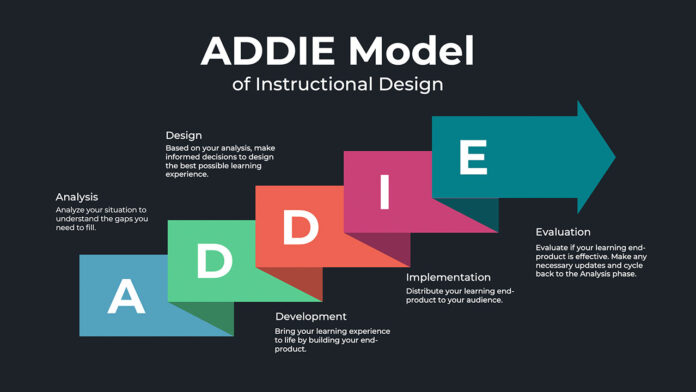
The 1970s witnessed the rise of systematic instructional design models like ADDIE (Analysis, Design, Development, Implementation, Evaluation), offering a structured framework to craft effective learning experiences. This model became the keystone of instructional design and continues to hold sway today.
In the present digital era, instructional design has embraced technology, multimedia, and e-learning platforms. As edtech continues to evolve, instructional designers leverage its potential to forge interactive and immersive learning experiences.
The Pivotal Role of Instructional Designers in Shaping Educational Experiences
Instructional designers are the custodians of modern education and training. They serve as the architects of learning, translating educational objectives into tangible, engaging experiences. Their role extends beyond mere transmission of information; it encapsulates understanding learners’ needs, designing effective assessments, and perpetually enhancing the learning process.
Instructional designers work in tandem with subject-matter experts, educators, and technologists to create exhaustive educational materials. Their skill set is diverse, melding creativity with a profound comprehension of pedagogy and technology. They are the change-makers, continuously adapting and innovating to cater to the emerging needs of learners in a dynamic educational landscape.
In the ensuing sections, we will delve deeper into the science of learning, the instructional design process, and the exhilarating potential of technology in reshaping educational experiences.
Instructional Design Process ─ An In-Depth Look
Source: waterbearlearning.com
The instructional design process, a cornerstone of effective learning experiences, is frequently illustrated by the acronym ADDIE (Analysis, Design, Development, Implementation, and Evaluation). This comprehensive framework encompasses each stage of the process, each integral to the success of the educational endeavor.
Analysis ─ Unearthing the Bedrock
In the initial stage, Analysis, designers delve deep to understand the learning needs and objectives. This stage is reminiscent of laying a building’s foundation. Designers work with subject-matter experts to define the target audience, their existing knowledge, and the new knowledge or skills they need to master. By conducting meticulous needs assessments and dissecting the learning environment, designers can pinpoint how to tailor the instructional materials.
Design ─ Drafting the Master Plan
The Design stage sees the transformation of insights gleaned from the analysis into a detailed plan for the learning experience. This plan delineates the overall framework, content arrangement, and pedagogical methods to be adopted. The choice of media and technologies that best support the learning goals are also determined at this juncture. This stage breathes life into the instructional materials conceptually, ensuring alignment with proven learning theories and teaching strategies.
Development ─ Constructing the Learning Journey
Upon finalizing the design blueprint, the development phase ensues, leading to the creation of tangible learning materials. Comprising content writing, visual design, interactive element development, and assessment crafting, this stage sees technology playing a pivotal role. The use of technology enables the design of multimedia, e-learning modules, and immersive simulations. To actualize the vision outlined in the Design stage, a close-knit collaboration between instructional designers, content creators, graphic designers, and developers is imperative.
Implementation ─ Delivering Knowledge to Learners
At the Implementation stage, the spotlight shifts to delivering the educational experience to the intended audience. This includes disseminating the content via appropriate platforms like Learning Management Systems (LMS), websites, or mobile applications. Instructors or facilitators may guide learners through the course materials, while assessment mechanisms and learner progress tracking are set up.
Evaluation ─ The Cycle of Perfection
The final stage, Evaluation, is pivotal in the instructional design process. It serves dual purposes: assessing the learning material’s effectiveness and guiding future enhancements. Evaluation could be formative (during development), summative (upon completion), or continuous feedback from learners and instructors. The insights derived from evaluations are harnessed to continually refine and amplify the learning experience.
Iterative Design and Agile Methodologies ─ The Game-Changers
Instructional design is not a one-way street; it’s a cyclical process. Designers frequently circle back to earlier stages to fine-tune aspects based on feedback and evolving requirements. Agile methodologies, a concept borrowed from software development, have permeated instructional design, fostering flexibility, teamwork, and swift prototyping. This iterative approach empowers instructional designers to adjust efficiently to changing learner needs and new technological advancements.
In the subsequent sections, we will delve into strategies for crafting captivating learning experiences, the importance of personalized learning paths, and the role assessments play in measuring learning outcomes.
Engaging Learning Experiences ─ A New Era in Education
Source: trainingindustry.com
The constantly changing landscape of education and training has pushed learner engagement to the forefront of effective learning outcomes. The contemporary learner desires more than simply absorbing information, they yearn for interactive and immersive experiences that cultivate profound comprehension and recall. Instructional designers, the visionaries behind these engrossing learning experiences, utilize a plethora of tactics to captivate learners.
The Potency of Multimedia
Multimedia elements, including videos, animations, infographics, and audio tracks, augment instructional materials and address a wide range of learning styles. Visual and auditory stimuli aid learners in comprehending intricate concepts, rendering content more approachable and memorable. An intriguing video or interactive animation can morph abstract notions into palpable, relatable experiences.
Gamification ─ Transmuting Learning into Entertainment
Gamification integrates aspects of gaming, such as challenges, rewards, and competition, into educational experiences. It harnesses the intrinsic human ambition for accomplishment and advancement, encouraging learners to actively engage and excel. Through gamified content, learners embark on quests, accrue badges, and monitor their progress, transfiguring the learning process into an engaging escapade.
Simulations ─ Experiential Learning
Simulations offer learners the chance to apply theoretical knowledge to practical situations. Whether a flight simulator for pilot training or a business simulation for honing management skills, these immersive experiences bridge the divide between theory and practice. They empower learners to make decisions, witness repercussions, and learn from their errors in a secure setting.
Virtual Reality (VR) ─ The Pinnacle of Immersion
Virtual reality takes engagement to unprecedented heights. It immerses learners in 3D environments where they can interact with objects, scenarios, and even historical events. VR not only serves visual and auditory learners, but also kinesthetic learners who benefit from hands-on experiences. From medical training to historical reenactments, VR transports learners to realms and eras they might otherwise never explore.
Case Studies of Successful Engagement
Let’s delve into some real-world examples of instructional design that have masterfully maximized engagement:
Duolingo ─ This language-learning platform ingeniously applies gamification with its points-based system, interactive lessons, and competition among learners. It transforms language acquisition into a delightful journey.
Microsoft flight simulator ─ Acclaimed for its realism, Microsoft Flight Simulator employs simulation to provide aspiring pilots with an authentic flying experience.
Oculus Rift ─ Oculus Rift and other VR platforms have revolutionized industries like healthcare and education by offering immersive simulations and virtual learning environments.
Assessing Learning Outcomes ─ The Criticality of Evaluations and Assessments
In the complex domain of instructional design, evaluations and assessments are more than mere milestones; they function as pivotal components that substantiate the efficacy of the learning journey. Assessments offer learners a platform to showcase their comprehension and command over the subject, while evaluations provide critical insight into the success rate of the adopted instructional design strategy.
Diverse Methods of Assessment
Instructional designers leverage a variety of assessment techniques to measure learner progress and understanding, classified primarily into formative and summative assessments.
Formative assessments ─ These are implemented in the midst of the learning process, assisting both learners and educators in comprehending the absorption rate of the material and pinpointing areas needing reinforcement. Immediate feedback is a key feature of formative assessments, such as quizzes, polls, peer evaluations, and classroom debates, facilitating learners to modify their approach and educators to customize instruction.
Summative assessments ─ Contrarily, summative assessments are conducted at the conclusion of a learning module or course to evaluate overall understanding and proficiency. They offer a comprehensive perspective of learner retention and accomplishments, manifesting as final exams, projects, and exhaustive essays.
Optimal Strategies for Effectiveness Measurement
Measuring the effectiveness of instructional design demands a comprehensive approach encompassing learner outcomes, feedback, and continuous enhancement. Here are some optimal strategies for this crucial pursuit:
Alignment with learning objectives ─ Ensure assessments are tightly aligned with the declared learning objectives, testing what learners were expected to learn.
Transparent rubrics ─ Formulate explicit and detailed rubrics that delineate the success parameters in assessments, offering learners a clear understanding of expectations.
Diverse assessment types ─ Implement a variety of assessment types to cater to different learning styles, including written assignments, group projects, presentations, and practical demonstrations.
Feedback loops ─ Establish feedback loops offering timely and constructive feedback. Feedback should highlight errors and provide improvement suggestions.
Peer and self-assessment ─ Integrate opportunities for peer and self-assessment, fostering self-reflection and honing critical evaluation skills.
Continuous formative assessment ─ Consistently incorporate formative assessments throughout the learning journey to track progress and make requisite adjustments.
Technology utilization ─ Leverage technology to streamline the assessment and feedback process. Online quizzes and learning management systems (LMS) can automate assessments and monitor learner performance.
Data collection and analysis ─ Gather data on learner performance and analyze it to discern trends, strengths, and areas needing enhancement. Data-driven insights can inform instructional design improvements.
Iteration and improvement ─ View assessments and evaluations as avenues for continuous refinement. Make necessary modifications to instructional materials and strategies based on assessment results and feedback.
By adopting these optimal practices, instructional designers can ensure evaluations and assessments not only gauge learning outcomes but also contribute to the enhancement of the learning experience. In the subsequent section, we will delve into the evolving role of technology in instructional design and its transformative impact on the educational landscape.
The Pivotal Impact of Technology on Instructional Design
Harnessing the Power of Learning Management Systems (LMS)
In the digital era, technology has become a cornerstone of instructional design, transforming the delivery and experience of education and training. Among the most significant breakthroughs is the deployment of Learning Management Systems (LMS). These platforms serve as a unified hub where instructional designers, educators, and learners can interact, harness resources, and steer the learning journey.
The advantages of Learning Management Systems are manifold:
Efficient content management ─ LMS empowers instructional designers to systematically organize and disseminate learning materials, ensuring learners have seamless access to the latest content.
Simplified assessment and feedback ─ LMS platforms expedite the creation and management of assessments, providing instant feedback to learners and facilitating data gathering for instructors.
Progress monitoring ─ The robust tracking features of LMS enable learners and educators to keep a tab on progress and performance, offering crucial insights for fine-tuning instructional design.
Inclusive accessibility ─ LMS platforms augment accessibility, catering to a variety of learning styles and needs, with options for multimedia, discussion forums, and collaboration tools.
Deciphering the Influence of AI and Data Analytics
Artificial Intelligence (AI) and data analytics have heralded a new epoch in instructional design. AI-infused technologies can customize learning experiences, adapting content and assessments to meet the unique needs and tastes of individual learners. For example, AI algorithms can scrutinize a learner’s performance and adjust the complexity of exercises to ensure appropriate challenges.
Data analytics gift instructional designers a wealth of insights. By scrutinizing learner interactions, assessment outcomes, and engagement patterns, designers can pinpoint areas for enhancement and employ data-driven strategies to continually refine the learning experience. This continuous feedback loop ensures that instructional materials stay relevant and effective.
Peering into the Future of Instructional Design Technology
The course of instructional design technology is charting several intriguing future trends:
Immersive technologies ─ Virtual Reality (VR) and Augmented Reality (AR) are poised for greater integration into instructional design, enabling immersive, experiential learning.
AI-enabled chatbots ─ AI-powered chatbots will offer instant support to learners, responding to queries and providing guidance, thereby elevating learner assistance.
Tailored learning pathways ─ AI-driven systems will further individualize learning pathways, empowering learners to chart their course based on their interests and proficiencies.
Microlearning ─ Bite-sized, targeted lessons, or microlearning, will gain momentum, making learning more palatable and adaptable across various devices.
Data privacy and ethics ─ With the growing reliance on data analytics, there will be an intensified focus on data privacy and ethical issues within instructional design.
Social learning ─ Collaborative and social learning tools will continue to advance, fostering peer interactions and knowledge exchange.
In conclusion, technology has embedded itself deep within the fabric of instructional design, offering unparalleled opportunities to forge engaging, personalized, and data-driven learning experiences. As we gaze into the future, the symbiosis between technology and instructional design promises to continue reshaping the educational landscape, unveiling new realms of learning potential for learners globally.
Transformative Impact ─ Case Studies in Instructional Design
Source: edutopia.org
The sphere of instructional design is replete with success narratives that illustrate the transformative potential of proficient educational strategies. Here, we delve into a few compelling instances wherein organizations and educational institutions have leveraged the art of instructional design to accomplish noteworthy outcomes.
Case Study 1 ─ IBM’s Reshaping of Technical Training
IBM, a multinational technology conglomerate, identified the necessity to modernize its technical training programs for its workforce. Their journey exemplifies how substantial corporations can reap the benefits of instructional design principles.
Challenges ─ IBM was confronted with ensuring its employees stayed abreast of swiftly advancing technologies, a task for which conventional training methodologies were proving inadequate.
Solution ─ IBM harnessed instructional design principles to conceptualize a flexible, on-demand training system. They formulated an internal learning platform providing employees access to a diverse array of courses and resources, specifically tailored to their roles and interests. This transformation empowered employees to take the reins of their own learning, enhancing their skills while catering to the company’s dynamic needs.
Case Study 2 ─ Harvard’s Triumph in Online Learning
Harvard University, a globally esteemed institution, acknowledged the potential of digital education and the imperative of delivering superior learning experiences to a worldwide audience.
Challenges ─ Harvard grappled with the task of translating its stringent academic programs to an online format while upholding the institution’s excellence standards.
Solution ─ Through a strategic alliance with instructional designers and substantial investment in developing interactive online courses, Harvard successfully broadened its global footprint. Learners worldwide were granted access to the university’s distinguished faculty and resources, validating that even the most respected institutions can leverage instructional design to remain at the vanguard of education.
These success narratives exemplify the transformative power of instructional design when effectively employed. They underscore the adaptability of instructional design principles across varied learning environments and the potential for organizations and institutions to surmount challenges and achieve stellar results. In the ensuing section, we will explore the evolving role of instructional designers in shaping the future landscape of education and training.
The Future Role of Instructional Design ─ From Catalysts to Game-Changers
Source: freshconsulting.com
In the digital age, the role of instructional designers is poised for significant evolution. Instructional designers will be catalysts for the transformation of educational and training paradigms. Here’s a glimpse of how their role will evolve:
Content curators and creators ─ Instructional designers will continue to curate and create content, but in increasingly diverse formats. They will craft multimedia experiences, develop interactive simulations, and design virtual reality learning environments.
Data-driven decision makers ─ With the wealth of data generated by learners, instructional designers will become adept at using data analytics to refine and personalize learning experiences. They will rely on data-driven insights to make informed decisions about content, assessments, and delivery methods.
Technology integrators ─ As technology advances, instructional designers will play a vital role in integrating emerging technologies like artificial intelligence, augmented reality, and immersive simulations into learning environments.
Facilitators of collaboration ─ Instructional designers will foster collaboration among learners through innovative pedagogical approaches, social learning platforms, and peer interaction, creating dynamic and engaging learning communities.
Continuous Professional Development for Instructional Designers
In the ever-evolving digital landscape, instructional designers are rapidly transitioning from traditional roles to game-changers, steering the transformation of educational and training paradigms. This article offers an insight into the dynamic future of instructional design:
Content architects ─ Instructional designers are not only curating but also crafting content in increasingly multifaceted formats. They are spearheading the creation of multimedia experiences, pioneering interactive simulations, and designing immersive virtual reality learning environments.
Data-savvy strategists ─ With the mounting data generated by learners, instructional designers are becoming data-savvy strategists. They leverage data analytics to fine-tune and customize learning experiences and use data-driven intelligence to shape decisions about content, assessments, and delivery methods.
Innovative technologists ─ As technology gallops ahead, instructional designers are becoming key players in integrating advanced developments such as artificial intelligence, augmented reality, and immersive simulations into learning environments.
Collaboration enablers ─ Instructional designers are not only fostering collaboration among learners through inventive pedagogical strategies but also promoting social learning platforms and peer interactions, creating dynamic and engaging learning communities.
The Imperative of Continuous Professional Development for Instructional Designers
To remain relevant in this fast-paced landscape, instructional designers must prioritize continuous professional development. This commitment ensures they keep abreast of the ever-changing trends and technologies in education. Key aspects of continuous development include:
Tech-savvy pioneers ─ Instructional designers need to stay updated with cutting-edge technologies, tools, and software pertinent to instructional design. This includes proficiency in data analytics, AI applications, and immersive technologies.
Learning theory connoisseurs ─ Keeping abreast of the latest pedagogical research and learning theories is essential. This knowledge influences instructional design decisions, ensuring alignment with best practices.
Adaptive innovators ─ The ability to adapt to changing learner needs, technologies, and educational paradigms is crucial. Instructional designers must espouse agile methodologies and be ready to pivot as required.
Network builders ─ Engaging with a community of instructional designers, educators, and technologists promotes collaboration and idea exchange. Participation in conferences, workshops, and online forums bolsters professional growth.
Instructional Design ─ The Future Catalysts of Education and Training
Instructional design harbors enormous potential to shape the future of education and training. Here are a few ways it will influence this transformation:
Personalized learning advocates ─ Instructional design will continue to champion personalized learning experiences, where content and assessments cater to individual learner needs and preferences.
Global access enablers ─ Instructional designers will enhance access to education and training for learners globally, eliminating geographic barriers and providing equal opportunities.
Workplace learning strategists ─ Instructional designers will play an instrumental role in devising workplace learning programs that encourage continuous skill development and adaptability in the swiftly changing job landscape.
Lifelong learning promoters ─ Instructional designers will foster a culture of lifelong learning, where individuals across age groups partake in educational experiences that enrich their personal and professional lives.
Conclusion ─ Harnessing the Power of Instructional Design for Enhanced Learning Experiences
Instructional design stands at the intersection of education and innovation, serving as a beacon for those dedicated to empowering learning experiences. Throughout our exploration of its significance, we’ve seen firsthand the transformative capabilities that instructional design offers. Regardless of whether you’re an educator, corporate trainer, or a self-learner aiming to boost your skills, the impact of adept instructional design is undeniably profound.
Courses in instructional design offer a way to tap into this untapped potential. By immersing yourself in its principles, methodologies, and associated technologies, you set yourself on course to creating compelling learning experiences. From bespoke online modules to immersive simulations, instructional design equips you to create educational and training content that resonates with learners, facilitates understanding, and encourages practical application.
Reflecting on the insights shared in this piece, ponder on the immense impact of instructional design on your own learning or training initiatives. Envision the potential outcomes when you weave these principles into your educational endeavors, be it within a classroom, a corporate environment, or a digital landscape.
The ball is now in your court. Deep dive into the vast realm of instructional design course, acquaint yourself with emerging technologies, and keep abreast of the latest in pedagogical research. By adopting the principles of effective instructional design, you position yourself as a change-maker in the sphere of education and training, turning raw information into enduring knowledge, and inspiring learners to reach their zenith.
Your journey into the world of instructional design is just commencing. Embrace it, mold it, and embark on an enlightening journey that promises enriched learning experiences not just for yourself, but also for those you are tasked with teaching.
Employers face numerous challenges in managing their workforce effectively. One of the critical aspects of successful workforce management is ensuring that employees are productive and using their work hours efficiently.
Many employers are turning to mobile phone tracking apps to monitor employee activities during working hours to address this. This article explores the importance of such apps, the factors to consider when choosing the best phone tracking app, and the best employee monitoring software for employers.
The Importance of Employee Monitoring
Employee monitoring has become an essential part of modern business operations. While respecting employee privacy is important, monitoring is crucial to ensure employees stay on task. The activity also ensures that employees adhere to company policies and do not engage in activities that can harm the organization’s reputation or security.
Why Do Employers Opt for Mobile Phone Tracking?
Source: business-review.eu
Here are some reasons why employers opt for mobile phone tracking apps.
Increased Productivity
Mobile phone tracking apps help ensure employees stay focused on their tasks, increasing productivity. Employers can identify and address any time-wasting activities promptly.
Compliance and Policy Adherence
Employers can use monitoring to ensure employees follow company policies and comply with regulations. It can be especially crucial in industries with strict data security requirements.
Security
Monitoring can help prevent insider threats and data breaches by identifying suspicious activities. It can also protect sensitive company information from falling into the wrong hands.
Resource Allocation
Employers can allocate resources more efficiently by identifying overburdened employees or departments and redistributing workloads accordingly.
Time Management
Monitoring helps employers understand how employees allocate their time during work hours. This insight can be valuable for setting realistic deadlines and expectations.
Factors to Look for When Choosing the Best Phone Tracking App
Source: quickbooks.intuit.com
Several critical factors need consideration before selecting the best mobile phone tracking app for your organization. The decision must depend on your specific needs and the nature of your business. Here are some key considerations:
Features
Different phone tracking apps offer varying features. Consider what you need most: location tracking, call and message monitoring, or app usage tracking. Look for apps that provide comprehensive features to meet your requirements.
Compatibility
Ensure the app remains compatible with devices your employees use. It should work seamlessly on iOS and Android platforms.
User-friendliness
The app should be easy for you and your employees to install and use. A complicated interface can lead to resistance and decreased productivity.
Data security
The best phone tracking app must prioritize data security. Employee data should remain encrypted and protected from unauthorized access.
Customization
Choose an app that can help you customize monitoring parameters to align with your company’s policies and goals. Flexibility is crucial to accommodate the unique needs of your organization.
Real-time Monitoring
Monitoring activities in real-time is essential for addressing issues promptly. Look for apps that provide real-time alerts and notifications.
Reporting and Analytics
A good app should offer comprehensive reporting and analytics tools. These can help you make informed decisions and track trends in employee behavior.
Legal Compliance
Ensure the app complies with local and international laws regarding employee monitoring. If you fail to do so, it can lead to legal complications.
Support and Updates
Choose an app with a reliable customer support system and a history of regular updates. It will ensure that you get assistance when needed and that the app remains compatible with the latest devices and operating systems.
Cost
Consider your budget when selecting a phone tracking app. Compare pricing plans and evaluate the app’s value concerning its cost.
Key Features of a Reliable Phone Tracking App
Source: linkedin.com
Here at this site are some key features to watch out for, similar to those available in the best employee monitoring software.
Real-time location tracking
The app should provide precise real-time location tracking, allowing you to monitor employee movements during work hours. The feature is precious for field-based roles.
Call and message monitoring
The app should log all calls and messages, providing a complete overview of communication activities. You can identify any unauthorized or irrelevant conversations.
App usage tracking
Consider an app that tracks application usage, helping you understand which applications employees use during work hours. It can highlight potential distractions or productivity-boosting tools.
Web browsing history
The app must capture web browsing history, allowing you to see which websites employees visit during work hours. The feature is essential for maintaining cybersecurity.
Geofencing
You must be able to set up geofences to receive alerts when employees enter or exit specific locations. It is beneficial for ensuring that field-based employees are where they should be.
Remote control
The app should enable remote control of the monitored device, allowing you to lock it or wipe data in case of loss or theft.
Comprehensive Reporting
Source: m.youtube.com
The app must offer detailed reports and analytics, giving insights into employee behavior and productivity trends.
Data security
It should prioritize data security with robust encryption and access controls, ensuring sensitive information remains confidential.
User-friendly Interface
The app’s intuitive interface must make it easy to install and use, minimizing disruptions to your workflow.
Customization
It should allow you to customize monitoring parameters to align with your company’s policies and objectives.
24/7 customer support
The team must offer round-the-clock customer support to assist you with any issues or questions.
Regular updates
The app should get regular updates to remain compatible with the latest operating systems.
Bottom line
Employee monitoring is necessary for ensuring productivity, security, and compliance in the modern business landscape. The best phone tracking app should offer comprehensive features, prioritize data security, and be user-friendly. Look for real-time tracking, call and message monitoring, and comprehensive reporting.
These features will make the app an invaluable tool for workforce management. Consider your organization’s needs and legal requirements before implementing an employee monitoring solution. Always communicate transparently with your employees about using such technology in the workplace.
As dawn heralds a new day, the world often turns its gaze towards the East, seeking ancient remedies for modern-day ailments. The gem they unearth from the depths of traditional wellness practices is none other than ginger.
This fiery root, while often found nestled in our spice racks, is now emerging as an elixir of health and vibrancy. This article unravels the profound properties of ginger elixirs and how they have created waves in the ocean of health and well-being.
The Science Behind Ginger’s Health Benefits
Source: hindustantimes.com
Rooted deep in scientific research, ginger’s power emanates from compounds like gingerol and shogaol. These potent substances have been linked to a plethora of therapeutic attributes. They don’t merely provide that tingling sensation on your palate but work actively against inflammation, reduce oxidative stress, and even possess anticancer properties.
Not confined to just these compounds, ginger’s repertoire of nutrients extends to essential oils, antioxidants, and minerals. When consumed, these compounds interact synergistically.
This means they work collectively to enhance the healing effects of each other, promoting holistic well-being and warding off diseases. To reap all the benefits it offers, a product like ImmuneSchien Ginger Elixir is a great thing to start using.
Crafting the Perfect Ginger Elixir
Constructing the quintessential ginger potion isn’t merely about tossing a few slices of ginger into boiling water. It demands a delicate blend of ingredients, temperatures, and brewing times to unlock its maximum potential. Being privy to these nuances ensures that you reap the optimal health benefits with every sip.
Dedication to perfection begins with selecting the freshest ginger roots. Those with smooth skin, devoid of wrinkles, are prime candidates. Once you’ve made your choice, remember, that the magic unfolds when the ginger’s compounds are gently teased out using warm temperatures, setting the stage for the next steps.
Essential Ingredients and Their Roles
fresh organic healthy ginger shot juice and root
It’s crucial to consider the accompanying players in your elixir. Lemon, for instance, is more than just a zesty companion. Packed with vitamin C, it amplifies the antioxidant potential of the brew. Honey, on the other hand, brings its own therapeutic arsenal, offering antimicrobial properties and acting as a natural sweetener.
Mint leaves, often an underrated element, play dual roles. They introduce a refreshing aftertaste, balancing the pungency of ginger, while also offering digestive benefits. The ensemble of these ingredients ensures that the elixir is not only a treat for your taste buds but also a boon for your health.
Step-by-Step Preparation Guide
Embarking on the journey to craft this potent brew starts with grating or thinly slicing about an inch of fresh ginger root. This increases the surface area, ensuring that the water extracts as many nutrients as possible. Next, infuse this grated masterpiece in about two cups of near-boiling water for about 10 minutes.
As the infusion takes its course, consider adding a teaspoon of honey, a splash of lemon juice, and a handful of mint leaves. Stir gently. Once your brew has reached a desirable temperature, strain it and pour it into your favorite mug. You now hold in your hands a concoction of wellness and flavor.
Variations for Taste and Preference
Source: 24mantra.com
While the classic recipe holds its own charm, personal preferences might nudge you to experiment. For those seeking a dash of spiciness, a pinch of black pepper can elevate the heat quotient. It doesn’t just spice things up but enhances absorption of ginger’s benefits.
For the ones with a sweet tooth, replacing honey with maple syrup can introduce a richer undertone. While variations are encouraged, it’s pivotal to maintain the core essence of ginger to ensure the drink retains its healthful properties.
Incorporating Elixir into Your Daily Routine
Initiating a habit often demands persistence. Begin by sipping on the elixir during moments of tranquility – perhaps as a morning ritual or a pre-bedtime indulgence. As your palate grows accustomed, you’ll naturally yearn for its unique flavor and the invigorating sensation it offers.
Over time, as its therapeutic effects manifest, the elixir will seamlessly weave itself into the fabric of your daily routine. Whether it’s a post-workout refreshment or an afternoon pick-me-up, the ginger potion will soon become an irreplaceable part of your day.
Health Benefits of Regular Consumption
Consistency is key. Imbibing this elixir regularly paves the path to a stronger immune system. With each gulp, your body equips itself better to fend off infections and maintain overall health. Not just immunity, your cardiovascular health too finds a champion in this brew.
Beyond the heart, the advantages cascade to cognitive functions. The antioxidants in ginger combat oxidative stress, which is linked to neurodegenerative diseases. Regular consumption could very well mean a sharper memory and a mind that stays young.
Boosting Immunity and Digestion
A bolstered defense mechanism isn’t the sole preserve of this drink. Your digestive system, too, finds a reliable ally in ginger. It stimulates the production of saliva, bile, and gastric enzymes, ensuring smoother digestion and reducing the likelihood of bloating or indigestion.
The fusion of ginger with lemon and honey creates a trifecta of digestive power. Their collective efforts soothe the digestive tract, mitigate nausea, and even offer relief from motion sickness. Simply put, this elixir could be the digestive companion you never knew you needed.
Managing Inflammation and Pain Naturally
Away from synthetic pain relievers, nature offers its own panacea. Anti-inflammatory properties are renowned. Chronic inflammation, an often silent ailment, can lead to various diseases if left unchecked. This elixir acts as a gentle yet effective check, ensuring your body remains inflammation-free.
Pain, be it menstrual cramps or headaches, finds a natural adversary in ginger. With consistent consumption, you might just find your reliance on over-the-counter painkillers waning, as nature’s remedy starts working its magic.
Elixir Recipes for Specific Health Goals
Targeting specific health objectives often necessitates tweaking the basic recipe. For those battling cold and flu, introducing a clove of garlic (minced) can augment the elixir’s disease-fighting prowess. If relaxation is your aim, a hint of lavender can introduce calming effects.
Weight-watchers can capitalize on the metabolism-boosting attributes of ginger. Complementing the elixir with a sprinkle of cinnamon not only elevates flavor but could also assist in weight management by stabilizing blood sugar levels.
Final Thoughts
As the curtain falls on this exploration of ginger elixirs, one can’t help but marvel at the profound versatility of this humble root. While the modern world is just waking up to its potential, it’s heartening to note that nature has encoded wellness in it all along.
So the next time you reach out for that mug of ginger brew, remember, you’re not just savoring a drink; you’re partaking in a revolution of health and vitality.
We use cookies to ensure that we give you the best experience on our website. If you continue to use this site we will assume that you are happy with it.